
Events
We are organising a series of events including workshops, seminars and conferences to gather thoughts, inspire research and disseminate outputs.
The 17th Annual Conference of the International Chinese Planning Society, Tianjin, China. 28/06/2023-02/07/2023
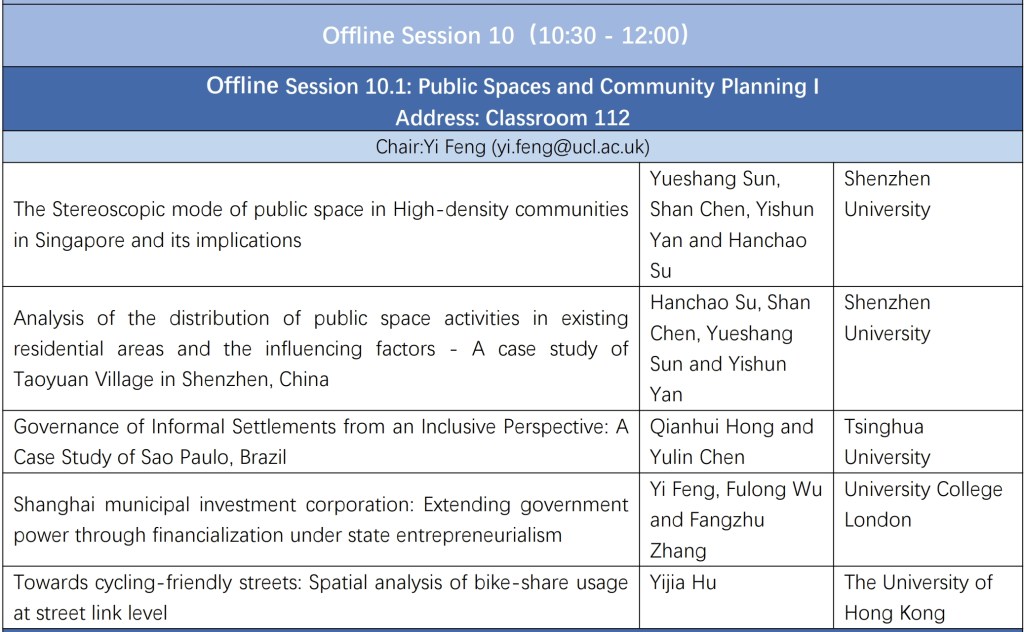
Professor Fulong Wu and Dr. Yi Feng attended the The 17th Annual Conference of the International Chinese Planning Society in Tianjin, China. Professor Wu gave keynote speech during the closing ceremony. Dr. Yi Feng chaired the session ‘Public Spaces and Community Planning’ and presented her work co-authored with Professor Fulong Wu and Professor Fangzhu Zhang.
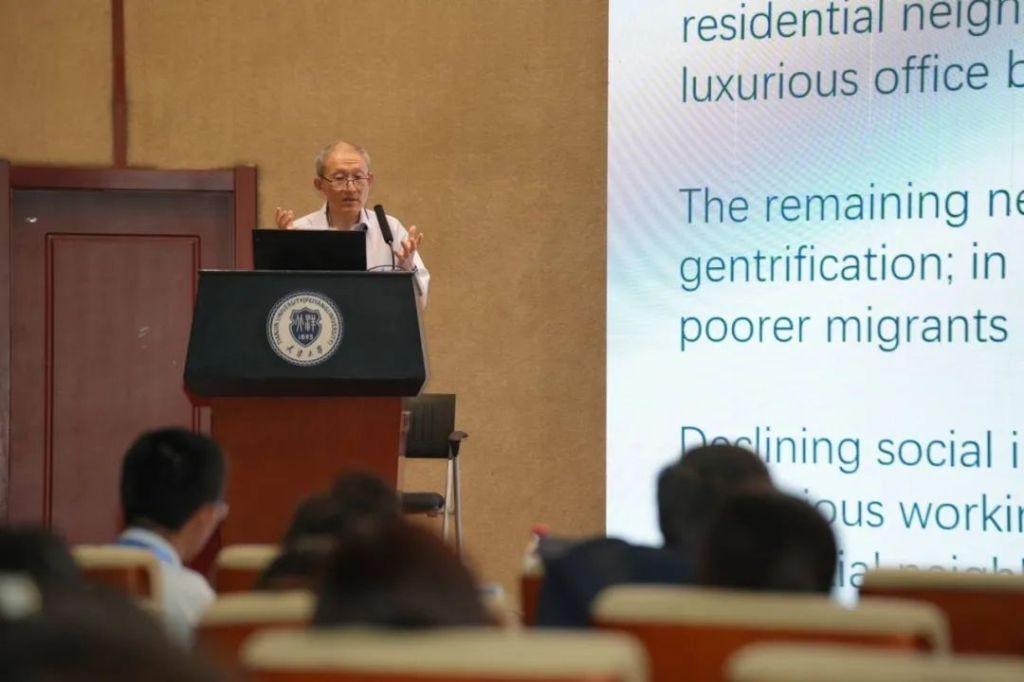
Professor Fulong Wu gave his keynote speech during the closing ceremony. He reviewed the unique mode of urban and city development of China and compared the mode with that of the US. He indicated that the context of China could not be well addressed by the mainstream city and urban theories based on the western context, and the researchers need to try to develop new theories based on the Chinese context, which is different and keeps chaning, to enrich theorisation. He believes that there are challenges and opportunities for China’s city and urban development in the future, and the Chinese context would be more open and diversified in a globalising trend.
Picture: http://www.china-planning.org/alpha/conference-program/
Dr. Yi Feng Chaired the session ‘Public Spaces and Community Planning‘ and presented her work ‘Shanghai municipal investment corporation: Extending government power through financialization under state entrepreneurialism’, which is a journal article co-authored with Professor Fulong Wu and Professor Fangzhu Zhang. This research unpacks financialized urban governance in China based on the operation of Shanghai Municipal Investment Corporation (SMI). Based on the latest corporatization of SMI, the research illustrates an embryonic form of financialized governance in which the Shanghai municipal government relies on financial means especially shareholding to manage and support SMI. In doing so, the municipal government internalizes financial techniques to manage state assets, seek funding, and guide urban development projects. The research argues that the power of the state is not undermined during the process of financialization. Instead, the Shanghai government extends its power to the financial market to achieve its goals.
The special session consisted of 5 presentations by researchers from mainland China, Hong Kong, and the UK. The topics included goverance of public space in urban communities and urban villages, informal settlements, urban streets, and lcoal government financing tools in different countries across the world.
 ChinaUrban