
Events
We are organising a series of events including workshops, seminars and conferences to gather thoughts, inspire research and disseminate outputs.
Governing urban development in China: Critical urban studies. Suzhou, China. 06/11/2024.
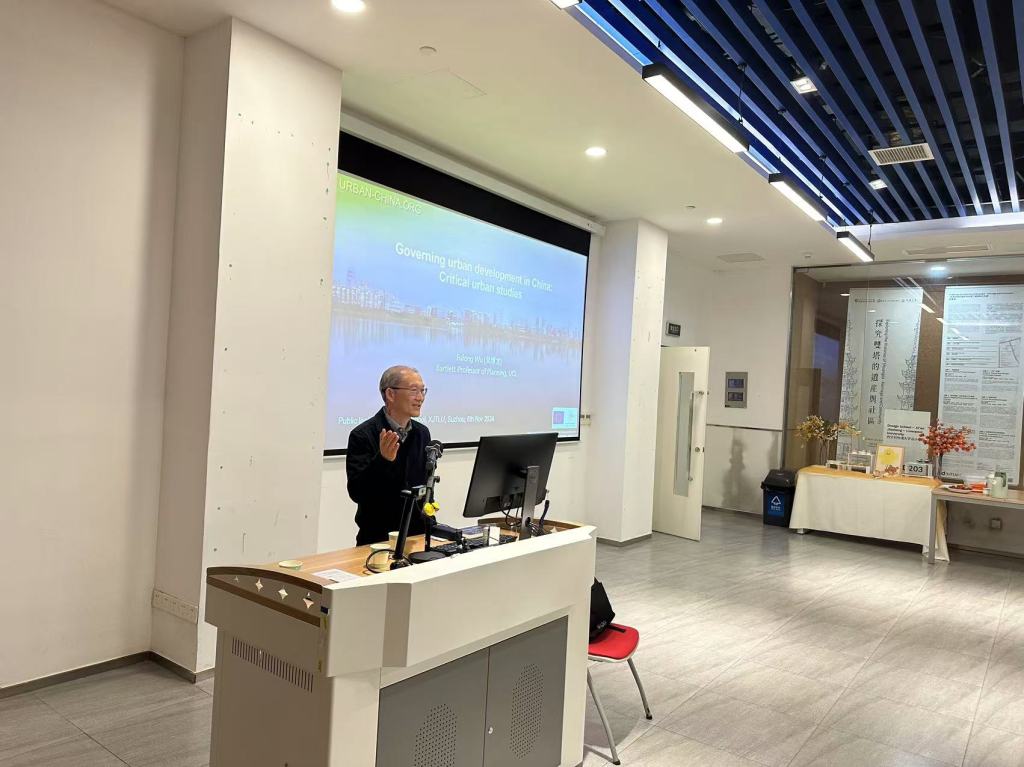
Prof. Fulong Wu was invited by Xi’an Jiaotong-Liverpool University to give a public lecture on governing urban development in China in Suzhou, China on 06/11/2024.
This public lecture was based on his new book (with Prof. Fangzhu Zhang) ‘Governing urban development in China: Critical urban studies‘. During the lecture, Prof. Wu introduced how he developed the concept of state entrepreneurialism to explain the governance mode of China’s urban development. The concepts explaining urban governance, such as urban entrepreneurialism, neoliberal governance, developmental state, and others, could partially explain the Chinese context. There are differences given the characteristic political-economic regime of China. State entrepreneurialism is theorised grounded-up, based on the Chinese context. Hence, it has a stronger explanatory power for China.
State entrepreneurialism combines two logics of capital accumulation and territorial politics. The Chinese state aims for economic growth through urban development. But this is not the sole purpose. The state also uses urban development to achieve other extra-economic statecraft objectives for political agendas key to stability and legitimacy.
Prof. Wu gave examples of how state entrepreneurialism is reflected in governance at the neighbourhood, city, and city-region levels.
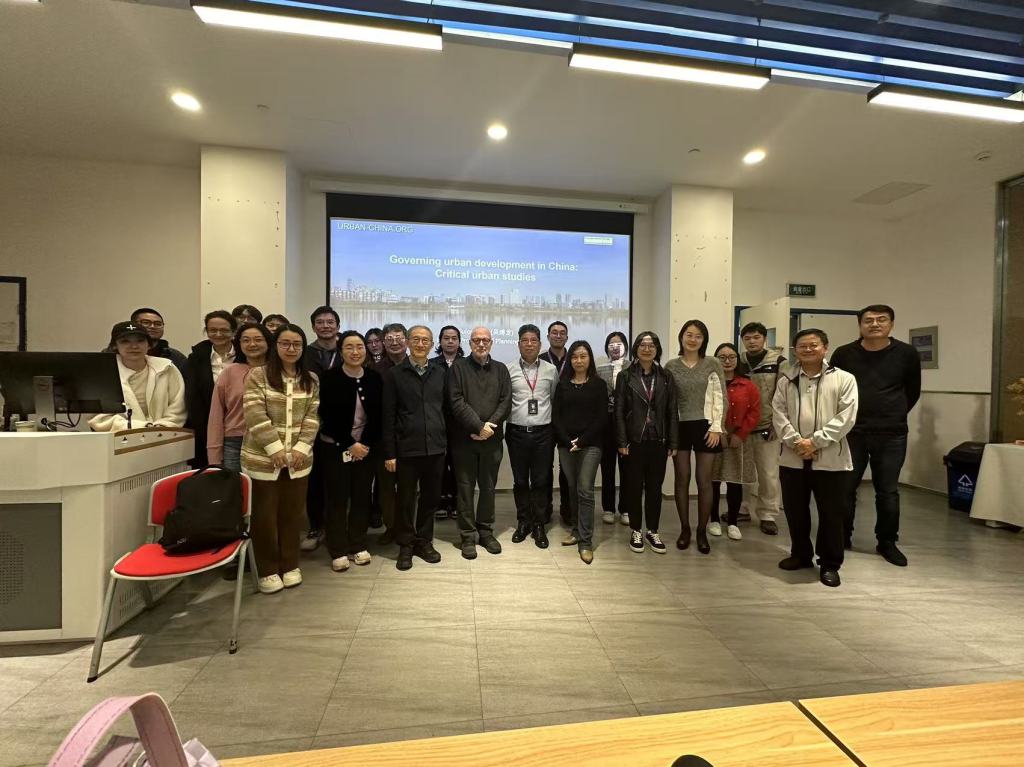
The talk led to active discussions.
 ChinaUrban