
Events
We are organising a series of events including workshops, seminars and conferences to gather thoughts, inspire research and disseminate outputs.
The American Association of Geographers 2024 Annual Meeting, Hawaii, US. 16/04/2024-20/04/2024.
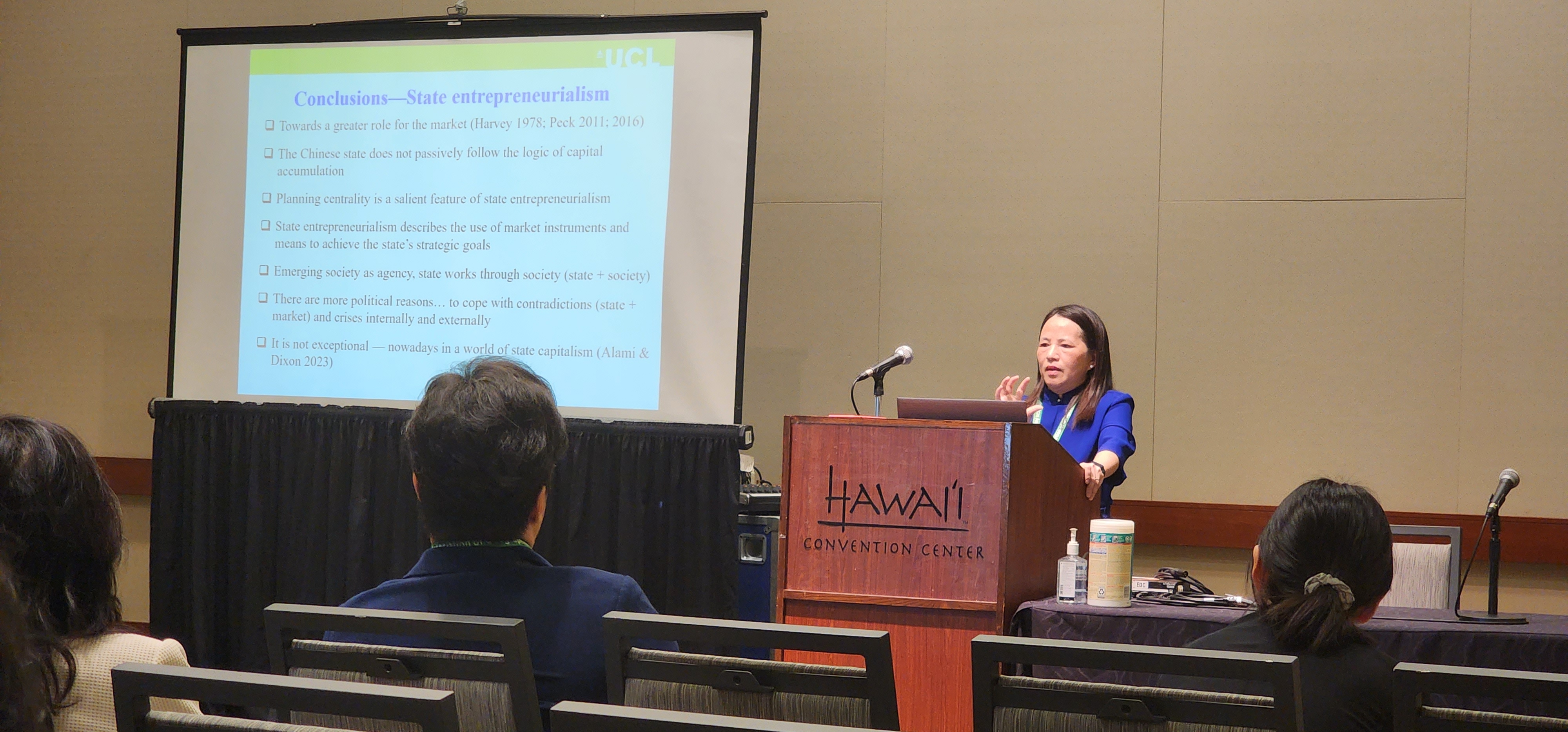
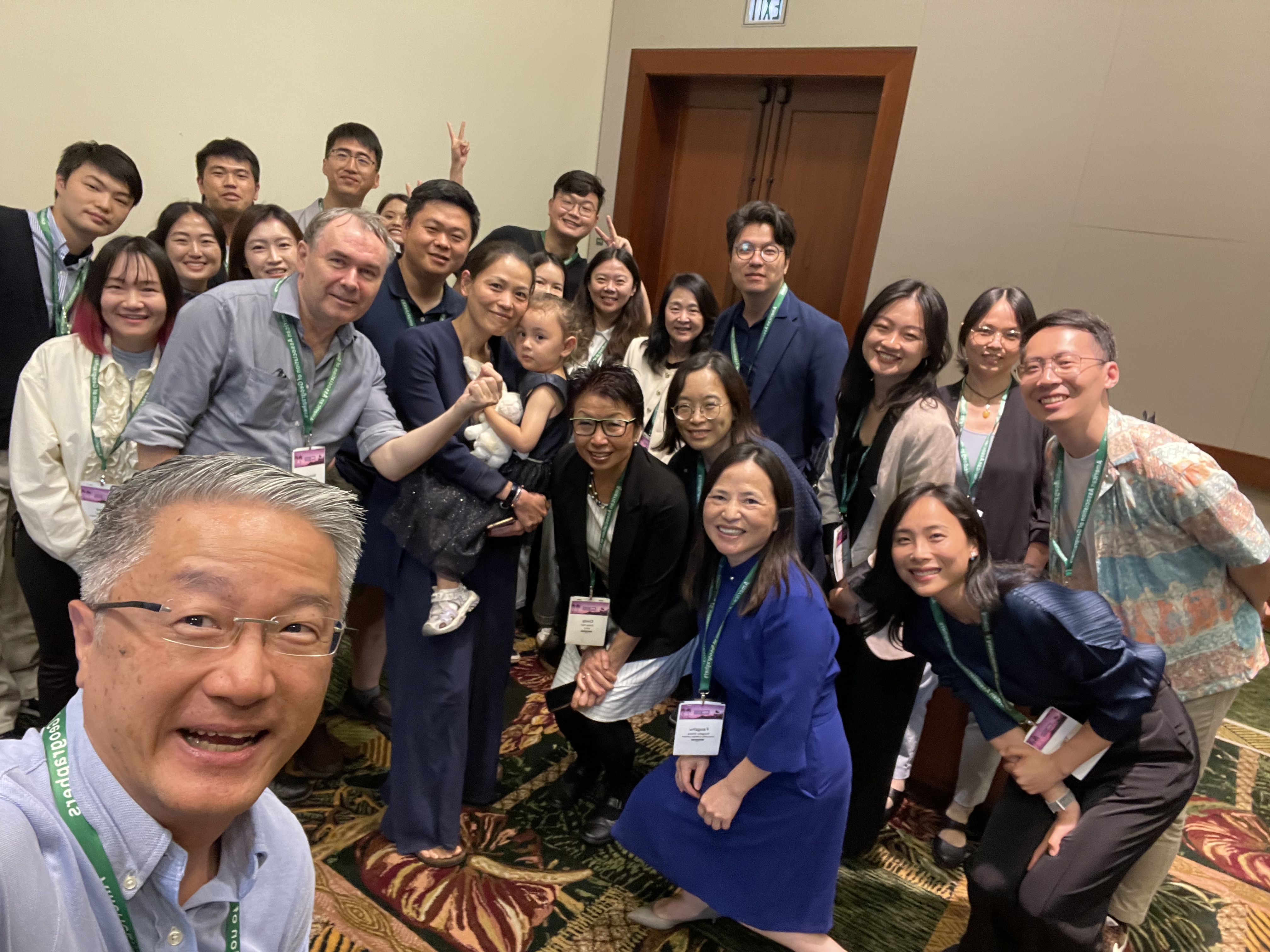
Prof. Fangzhu Zhang attended The American Association of Geographers (AAG) 2024 Annual Meeting in April 2024 and organised five special sessions on China’s urban governance with the focuses being the role of the state, city-region dynamics, urban-rural dynamics, innovation and transformation, and financing strategies and land supply. 22 speakers across the world attended the sessions and shared their research.
Special Session 1 was organised by Prof. Fangzhu Zhang and Prof. Jiang Xu from The Chinese University of Hong Kong. This session aimed to discuss the centrality of the state and its multiple logics in urban governance. Five speakers presented their research, inlcuding:
- Fangzhu Zhang, UCL. Rethinking China’s urban governance: The role of the state in neighbourhoods, cities and regions.
- Xuanyi Nie, University at Buffalo. Shifting Roles of the State in China’s Innovation-Driven Urban Renewal: A Case Study of Nanjing Silicon Alley Projects.
- Jiang Xu, The Chinese University of Hong Kong. When Officials Meet Technologies: How Does China’s New Spatial Planning System Shape Planning Practice?
- Nicholas Phelps, University of Melbourne. Governing the archipelago economy of special economic zones: relational state intrapreneurialism in China’s Special Economic Zone economy.
- Yushu Zhu, Simon Fraser University. State-Embedded Gentrification.
Special Session 2 was organised by Prof. Fangzhu Zhang and Prof. Jiang Xu from The Chinese University of Hong Kong. This session aimed to discuss the centrality of the state reflected by city-regional governance. Three speakers presented their research, inlcuding:
- Wen Chen, Nanjing Institute of Geography and Limnology. Governing cities through regions: Evolution of regional plans for the Yangtze River Delta mega city-region.
- Jun Zhang, University of Toronto. Authoritarian Regionalism Reversed: Remaking China’s Party-State Capitalism in The Pearl River Delta, 1978-2023.
- Siyi Liu, UCL. Smart City-Regionalism in Greater Bay Area: Analyses on Policies.
Special Session 3 was organised by Prof. Jiang Xu from The Chinese University of Hong Kong and Prof. Fangzhu Zhang. This session aimed to discuss the centrality of the state reflected by urban-rural governance. Five speakers presented their research, inlcuding:
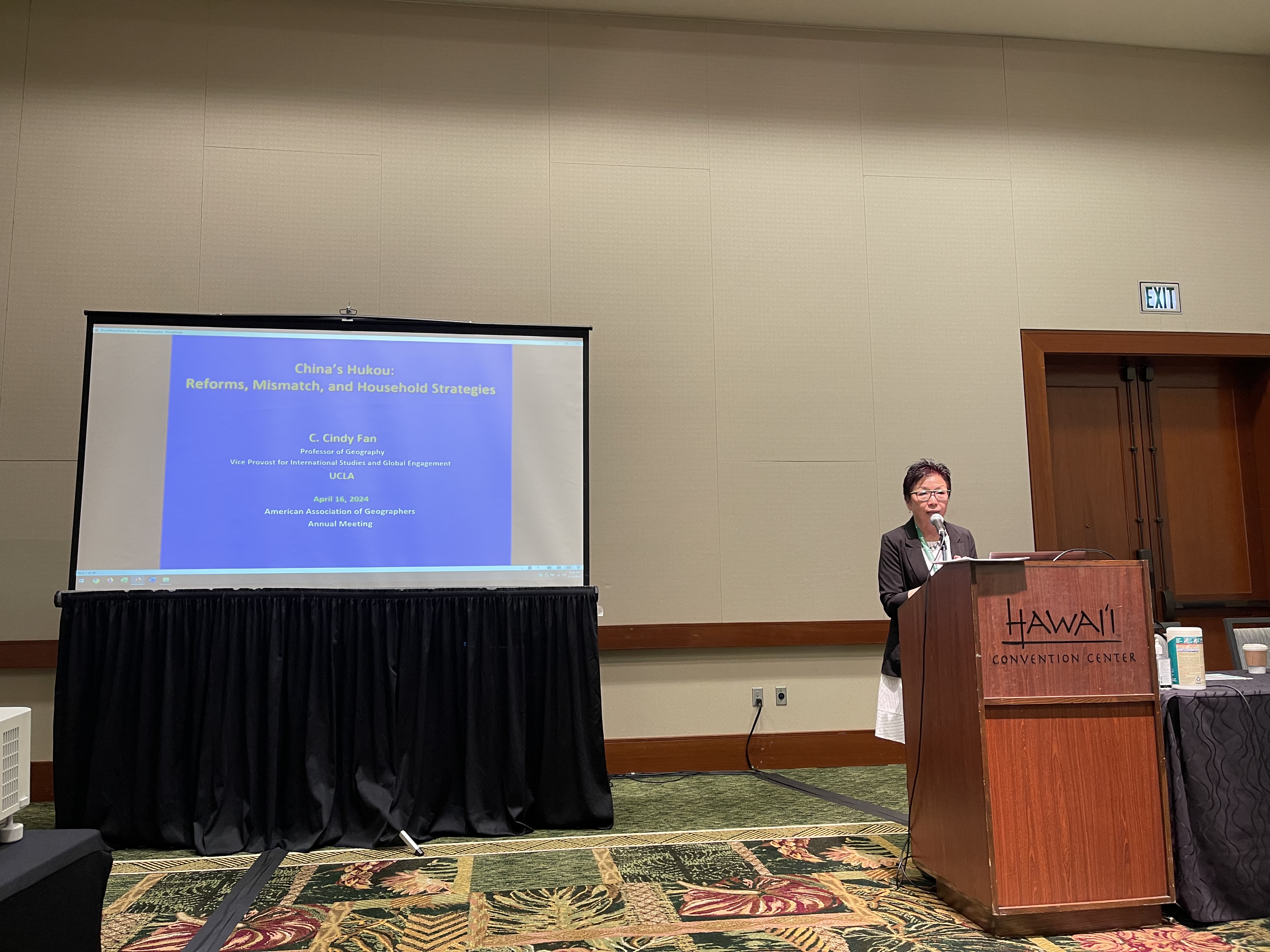
- Cindy Fan, UCLA. China’s Hukou Reforms: Has Anything Changed.
- Shengxi Xin, UCL. Conceptualising the Transitioning Chinese Rural Governance Model under Rural Revitalisation.
- Kaiyang Jia. Unpacking the Divergent trajectories of the Rural-Urban Interface in China: a comparative socio-spatial analytics approach.
- Sujuan Zhong, Nanjing University. Land market integration under ambiguous property rights: A Comparative Case Study from China.
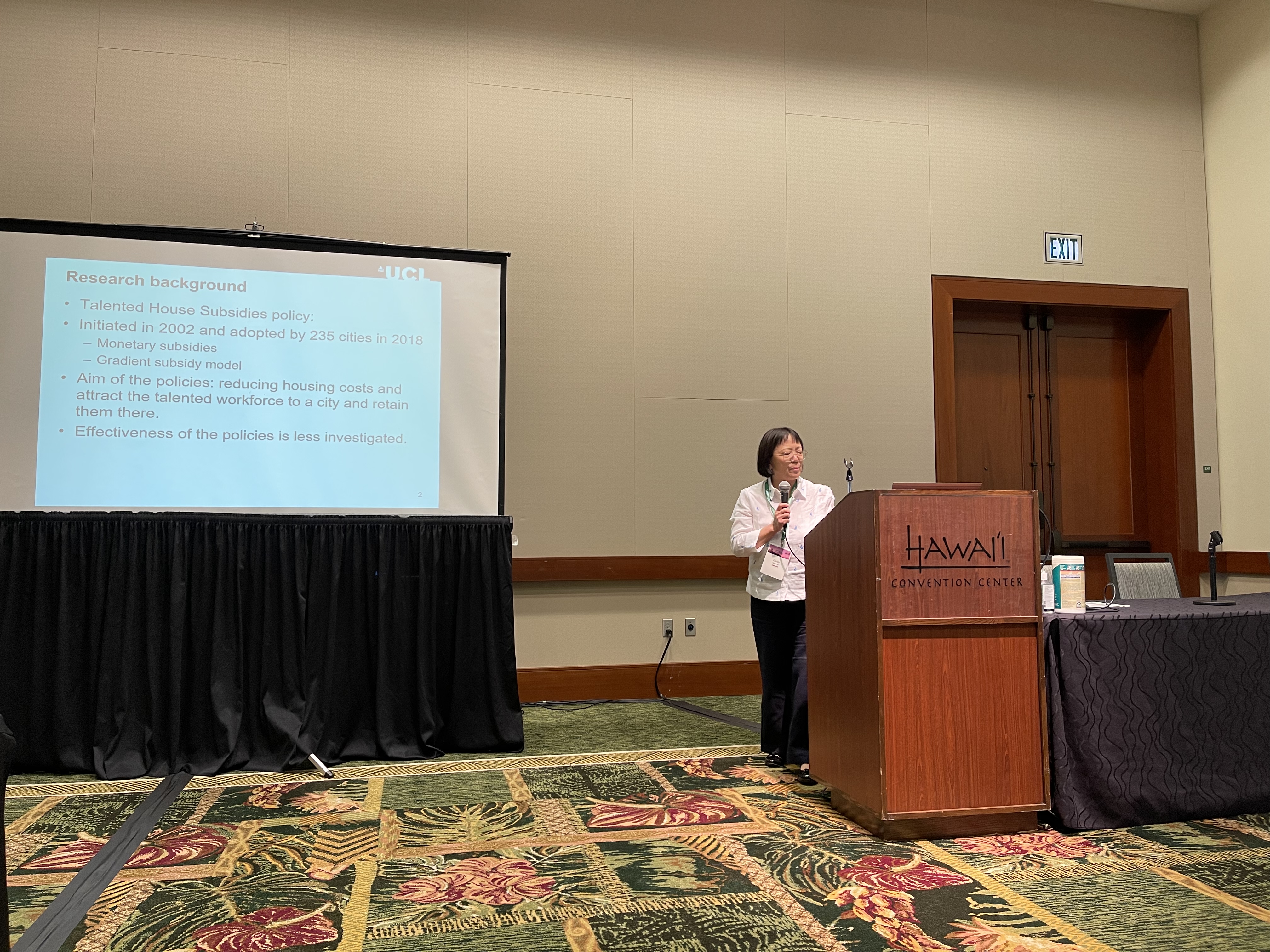
- Qiulin Ke, UCL. Effectiveness of TH policy on talent migration decision in China.
Special Session 4 was organised by Prof. Jiang Xu from The Chinese University of Hong Kong and Prof. Fangzhu Zhang. This session aimed to discuss the centrality of the state reflected by the governance on innovation and transformation. Five speakers presented their research, inlcuding:
- Julie T. Miao, University of Melbourne. From ‘planning-for-growth’ to ‘planning-for-innovation’: a new paradigm in China?
- Mengdi Wu, The University of Hong Kong. Unpacking Dynamics within the State Apparatus for Technological Catch-up in Urban China: The Case of Biotechnology in Guangzhou.
- Jie Guo, Guangzhou Institute of Geography, Guangdong Academy of Sciences. Experimental state rescaling and goal-oriented governance in China.
- Jiayao Liu, University of Hong Kong. Failing to change: The transformation of urban entrepreneurialism hindered by land oversupply and decentralised governance in Zhongshan, China.
- Clansie Xiaoqian Cai, National University of Singapore. Thinking City through Aesthetic Citizenship: China as Method.
Special Session 5 was organised by Prof. Fangzhu Zhang and Prof. Jiang Xu from The Chinese University of Hong Kong. This session aimed to discuss the centrality of the state reflected by the governance on financing urban development and land supply. Four speakers presented their research, inlcuding:
- Junxi Qian, The University of Hong Kong. Learning to be an urban state: Urban development financing and state building in Lhasa, Tibet.
- Jia Ling, The Hong Kong Polytechnic University. Qianhai on the Edge: Land Development Innovation, Financialized Governance and State Entrepreneurialism.
- Calvin King Lam Chung, The Chinese University of Hong Kong. Financing green projects in China: A research agenda.
- Jiakai Zhang, New Mexico Tech. How Does Land Use Policy Affect Local Labor Market and Housing Market?
All the sessions led to productive discussions and generated insights for future research and policy making regarding the role played by the diversified state actors in urban development and beyond in and outside China.
 ChinaUrban