
Events
We are organising a series of events including workshops, seminars and conferences to gather thoughts, inspire research and disseminate outputs.
Connecting Urbanism Across Time And Space. Jena. 27/10/2025.
Professor Fulong Wu was invited by the Department of Coevolution of Land Use and Urbanisation at Max Planck Institute of Geoanthropology to attend the launch event Connecting Urbanism Across Time and Space. Prof. Wu shared his research on China’s urbanisation.
Prof. Wu gave a talk titled ‘China’s urbanisation: processes, operations and challenges’. This presentation examines China’s urbanisation and addresses the question of its operation at multiple spatial and temporal scales in the world. The proportion of the Chinese urban population was maintained below 20% until 1980. Since then, China has witnessed an urban explosion and revolutionary social changes. Despite a vibrant regional trade system in history, rural China had been stabilised by Confucian culture and differentially localised social networks. The imperial state operated on a limited scale under the constraint of social surplus. This feature continued into Mao’s era, despite state-initiated industrialisation, which prioritised heavy industries and military capacities. This extractive operation is akin to its predecessor in that it preserved social coherence while restricting the scale of urbanisation. The market reform disrupted the long-standing involution, which relied on intensifying labour input in agricultural production. China has thus witnessed the large scale rural-urban migration in human history, driven by a surplus rural population seeking employment in cities, enabled by China’s emergence as the world’s factory. The dislocation of rural-urban migrants has resulted in underused rural land—empty rural villages—yet, due to a long-standing cultural tradition, they continue to build new houses back home. The expansion of industrial and built-up land outpaces the urbanisation of the population. At the root of this is the financialisation of land, which is utilised as collateral for financing economic activities. This transforms human-land relations in urbanisation into state-capital relations in global capitalism. Spatially, China’s urbanisation has led to urban clusters and city-regional forms. The intensively urbanised areas are situated away from ecologically fragile regions. New technological advancements, such as electric vehicles (EVs) and solar energy use, create new possibilities for climate-friendly urbanisation. Theoretically, urbanisation could be benign by facilitating more efficient land use. In reality, however, China’s urbanisation still poses a severe challenge to sustainability, as a post-growth scenario is not entirely feasible. With the new ethos of ecological civilisation, urbanisation struggles to transcend extensive forms.
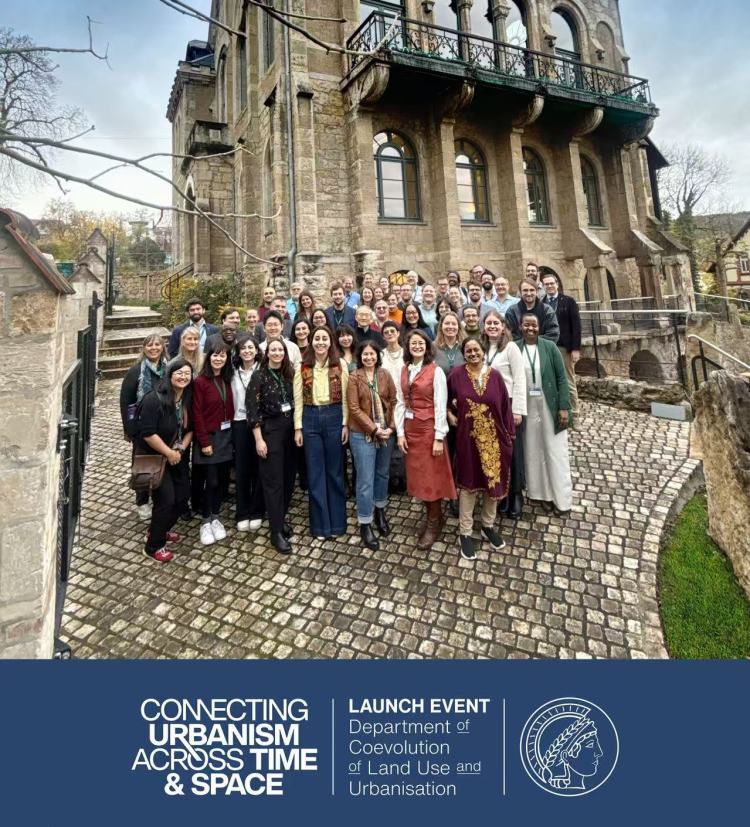
Photos by the host
 ChinaUrban