
Events
We are organising a series of events including workshops, seminars and conferences to gather thoughts, inspire research and disseminate outputs.
The RGS-IBG Annual International Conference. London, UK. 27/08/2024-30/08/2024.
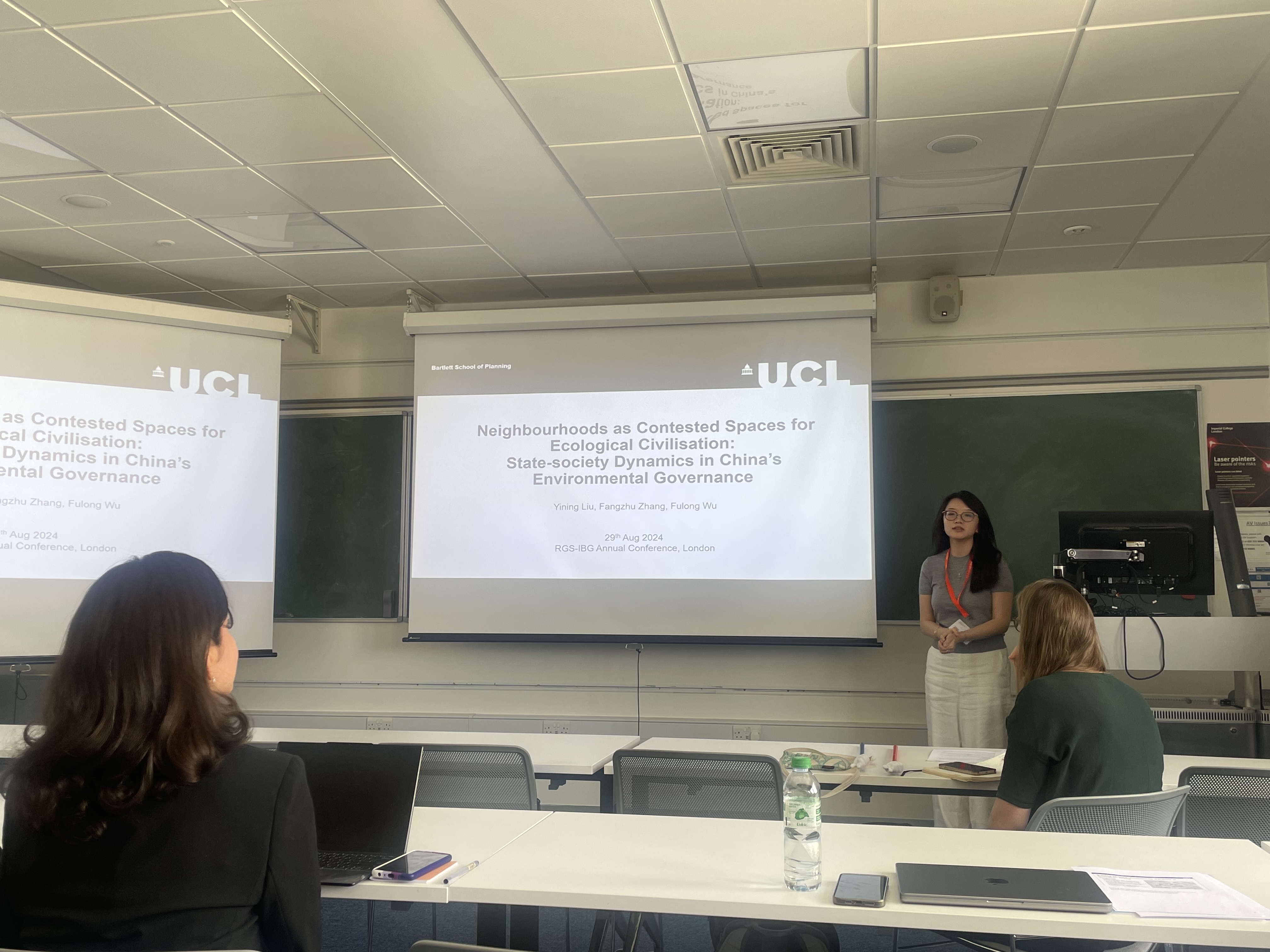
Dr. Yi Feng and Yining Liu attended The RGS-IBG Annual International Conference from 27/08/2024-30/08/2024 in London, UK. They shared their recent research in parallel sessions.
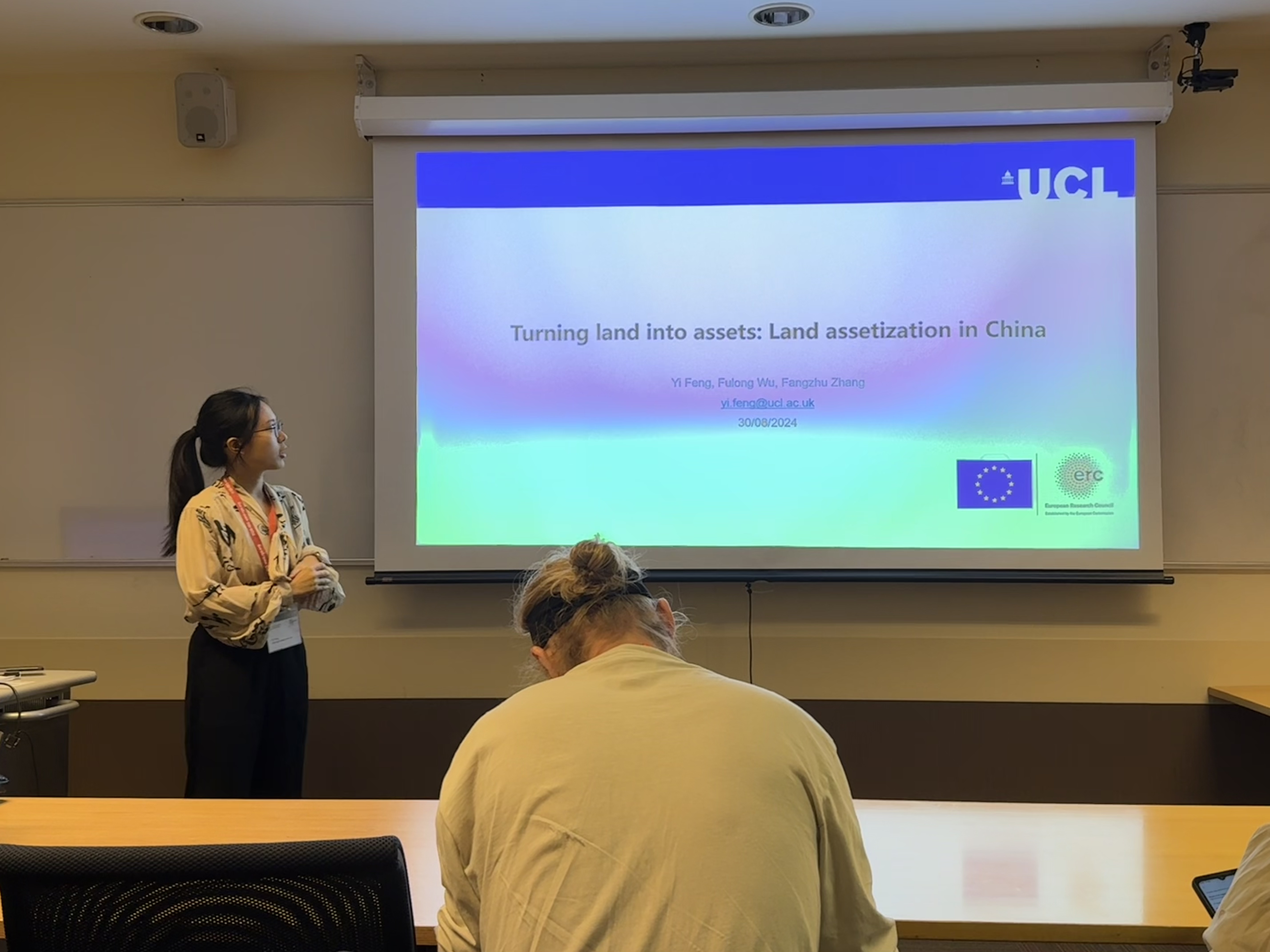
Dr. Yi Feng shared her research on land assetisation. The title was ‘Turning land into assets: Land assetization in China’. Local governments use state-owned land to raise massive funds to finance urban development in China. However, how is land formed and calculated as a type of financial asset? Seeing land assetization as a social technical process, we aim to unpack the political-economic dynamics underpinning the phenomenon of turning land into a financial asset. Based on practices in Shanghai, Nanjing and Jiaxing, this study provides a concrete account of how state-owned land is mobilized to secure funds by urban development corporations (chengtou) and the state itself (land reserve bonds). In either approach, the land has not been a normal type of collateral but an embodiment of state credit. Moreover, the state manipulates calculative techniques to achieve a favorable quantification of asset value. Based on asset formation and calculation, we unpack how land assetization is constructed by specific state interventions, which is the intrinsic reason for financial risks associated with local borrowing.
Yining Liu shared her work titled ‘Neighbourhoods as Contested Spaces for Ecological Civilization: State-Society Dynamics of China’s Environmental Governance’ in Chengdu’. China’s ecological civilization paradigm constantly seeks to achieve the greening of the society. Neighbourhoods have now been promoted and targeted as a key scale for reinforcing social networks, generating social capitals, implementing co-production of public spaces, and delivering community-level environmental upgrades. As the central state imposes increasing attention and interventions to the neighbourhood scale, this specific scale is gradually enrolled into the multi-scalar states’ agenda. This research intends to use neighbourhood-scale environmental governance as an example, to discuss the state-society power dynamic in China.
In the case study of Shanghai Community Garden Initiative, the objectives of nationwide ecological civilization are manifested through efforts of both social organizations and state authorities. Meanwhile, state mobilization does not eliminate the agency of the society, interestingly, the originally self-organized community garden projects had been voluntarily enrolled into local environmental paradigm, where the agency of social actors at a neighbourhood scale is strategically channelled by state actors. Differentiated from the neighbourhood-scale green spaces and its political implications from neoliberal contexts, China’s case is exhibiting an intricate state-society relationship where the state and the society are not necessarily in an opposing position. The boundaries between state and society are rather blurred, with minimal confrontation and strategic cooperation. The neighbourhood-scale projects embodies both the state’s governance arrangements and the agency of non-state actors, which make the neighbourhoods as contested spaces to reflect a changing state-society power dynamics in China.
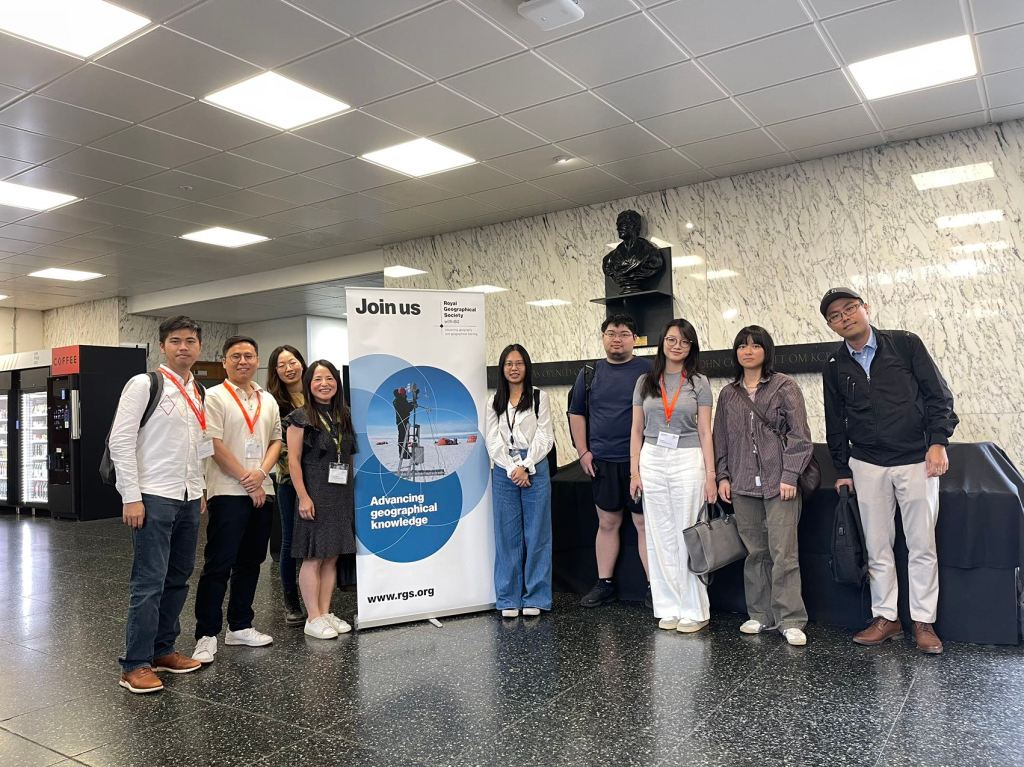
Other current and former members in the project or the research group also attended the conference with or without giving presentations. A happy reunion of old friends!
 ChinaUrban