
Events
We are organising a series of events including workshops, seminars and conferences to gather thoughts, inspire research and disseminate outputs.
The Regional Studies Association 2024 Annual Conference, Florence, Italy. 11/06/2024-14/06/2024.
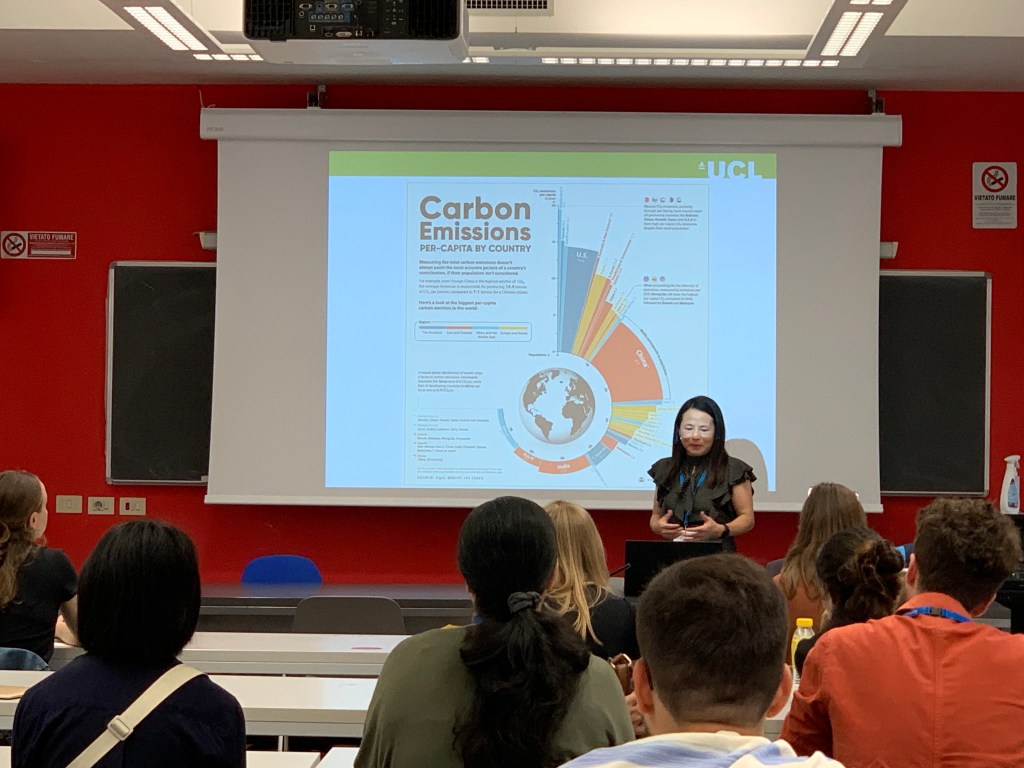
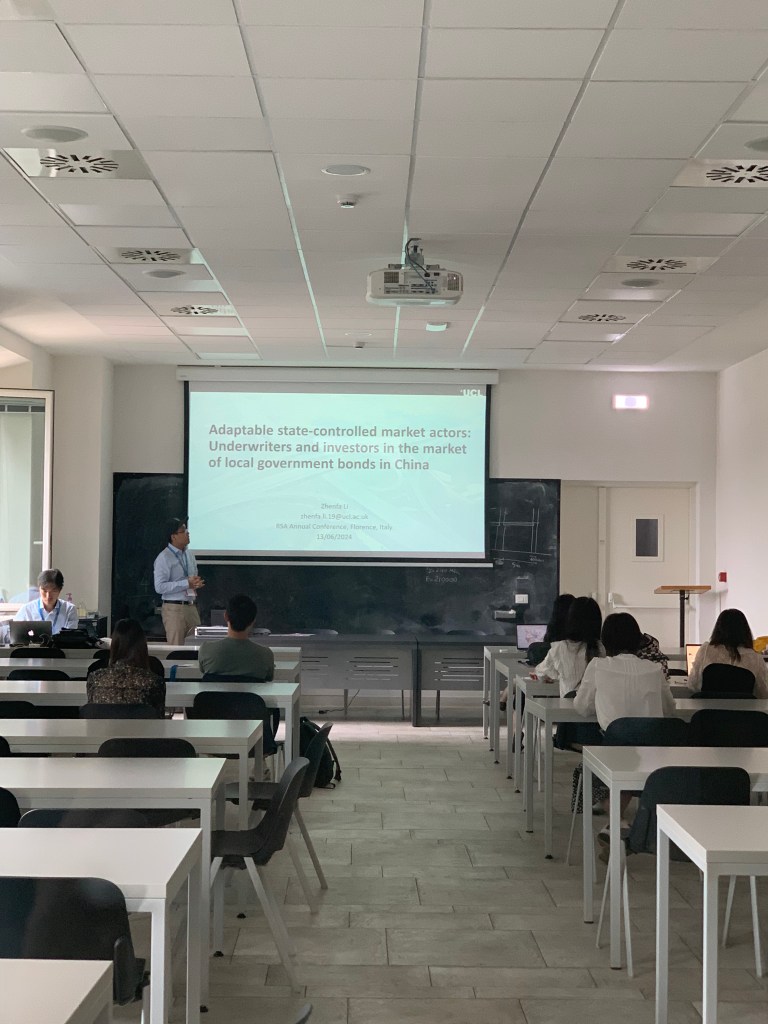
Prof. Fangzhu Zhang and Zhenfa Li attended The Regional Studies Association 2024 Annual Conference held in The University of Florence. They shared their research on China’s environmental governance and state-market relations in urban financialisation, respectively.
Prof. Fangzhu Zhang presented her research on China’s environmental governance co-authored by Prof. Fulong Wu and Miss Yining Liu. This research pays attention to a ‘green turn’ towards environmentalism under ‘ecological civilisation’ in China. The central government introduces national policies regarding environmental practice and the local government across the country acts accordingly. This research systematically reviews the different actors in various environmental development projects such as eco-cities, low-carbon cities, greenways. It also examines the role of multi-scalar states and the relation between the state, market, and society in environmental governance. It aims to engage the core debate in China’s environmental government—whether the Chinese state leads to a ‘growth machine’ that essentially aims to subject the natural environment to capital accumulation or whether the construction of ‘ecological civilisation’ has become the governmentality of its multi-scalar states.
Zhenfa Li presented his research on state-market relations in urban financialisation in China. The empirical focus is local government bonds (LGBs). The research examines why the underwriters and investors in LGBs are willing to do the business, given that LGBs are hardly profitable due to very low interest rates and immobility in the secondary financial market. The main findings are that the underwriters and investors are mostly state-owned commercial banks. They have several reasons to do LGB business. One the one hand, they support policy objectives of the central and local governments the majority shareholders of these banks. One the other hand, LGB business could create substantial profits for these banks because they could acuqire a large amout of local fiscal funds by doing LGB business. The local government would put more of its fiscal funds into the account of the banks which do more LGB business. The money is key to profit making of the banks because their main profits come from the interests of issuing loans.
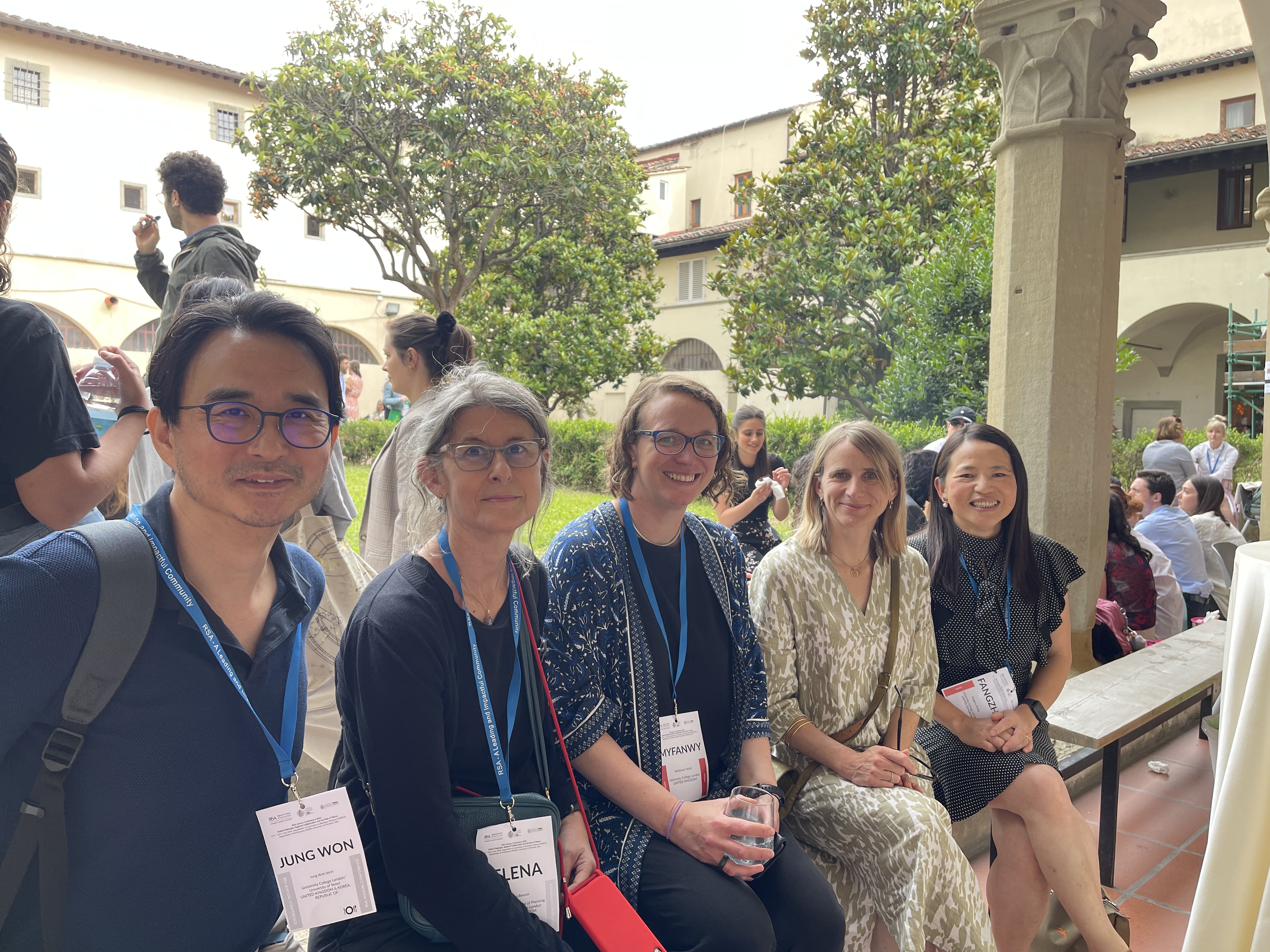
In addition to giving presentations, Prof. Fangzhu Zhang and Zhenfa also meet with friends and colleagues across the world to exchange ideas.


 ChinaUrban